In this article
Summary first:
• Spray foam insulation problems in Madison homes most often trace back to poor installation conditions, wrong product selection, or inadequate ventilation planning.
• Catching these issues early and hiring a qualified local contractor prevents costly repairs and keeps energy performance on track.
Most spray foam insulation failures are preventable. The problems Madison homeowners encounter fall into a handful of recurring categories, and each one has a clear, practical fix.
Madison’s climate sits in DOE Climate Zone 6, where winter temperatures routinely push surfaces well below the thresholds that spray foam needs to bond correctly. Choosing the right contractor for spray insulation in Madison, WI, means finding someone who understands these local conditions, not just the product itself.
The Most Common Spray Foam Application Problems
Poor installation technique is the leading cause of spray foam failure. Spray foam is far more sensitive to installation conditions than other insulation types. Three issues appear most often in Wisconsin homes:
Shrinkage and adhesion failure. Spray foam is a two-component system that must be mixed at a specific ratio. If the mix is off by even a small percentage, the foam may not cure properly and will shrink as it ages. Spray foam should be applied to surfaces above a minimum temperature, usually 40 to 60 degrees depending on the product. In a Madison winter, attic and crawlspace surfaces can fall well below that range, making pre-warming the substrate a necessary step.
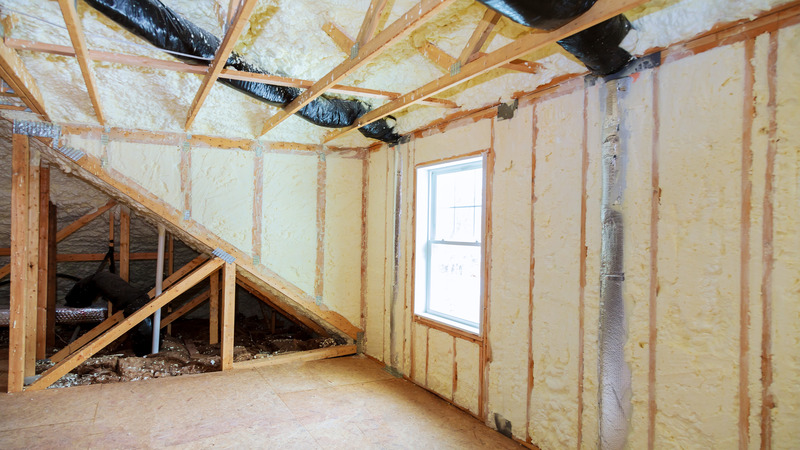
Coverage gaps. Missing areas can lead to gaps in your insulation coverage, which reduce the efficiency of the spray foam. These gaps eliminate the air-sealing benefit of the foam and create thermal bridges where heat can bypass the insulation. A thorough post-application inspection with a thermal camera catches gaps before drywall goes up.
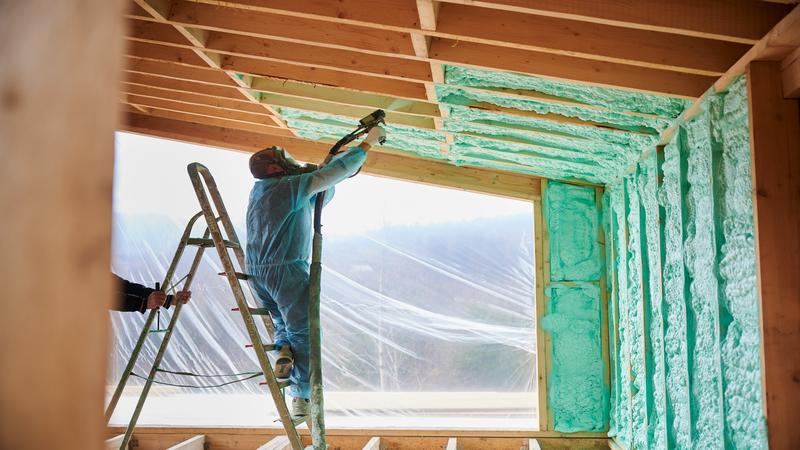
Over-expansion. Spray foam expands as it is applied. If the installer is not careful, over-expansion can occur, putting pressure on walls, ceilings, or windows and leading to cracks or damage. Closed-cell foam is especially prone to this when applied too thick in a single pass.
Open-Cell vs. Closed-Cell: Choosing the Wrong Type
Selecting the wrong foam type for the application is a common and costly mistake. The table below summarizes the key differences for Madison homeowners:
| Factor | Open-Cell Foam | Closed-Cell Foam |
| R-value per inch | ~3.5-3.8 | ~6.0-7.0 |
| Vapor permeability | Permeable (requires vapor retarder in Climate Zone 6) | Low perm, acts as vapor retarder |
| Best application | Interior walls, attic decks | Crawlspaces, basements, exterior sheathing |
| Moisture risk | Higher if exposed to bulk water | Lower |
When using open-cell spray foam, a low-perm Class II vapor retarder is required in Climate Zones 5, 6, 7, and 8. Madison falls in Zone 6, so skipping that vapor retarder layer with open-cell foam is a code violation that can also lead to condensation damage inside the wall assembly over time.
The DOE Building America Solution Center notes that the primary risks with spray foam under the roof deck are rainwater leaks, condensation from diffusion and air leakage, and built-in construction moisture. Matching the foam type to the assembly and climate zone eliminates most of these risks before they start.
Ventilation and Indoor Air Quality Concerns
A well-sealed home needs a deliberate ventilation strategy. Spray foam can lead to a dangerous level of airtightness. The more airtight a home is, the better its ventilation system needs to be, and lack of proper ventilation can lead to superheating, carbon monoxide poisoning, and roof damage if spray foam is used in the attic.
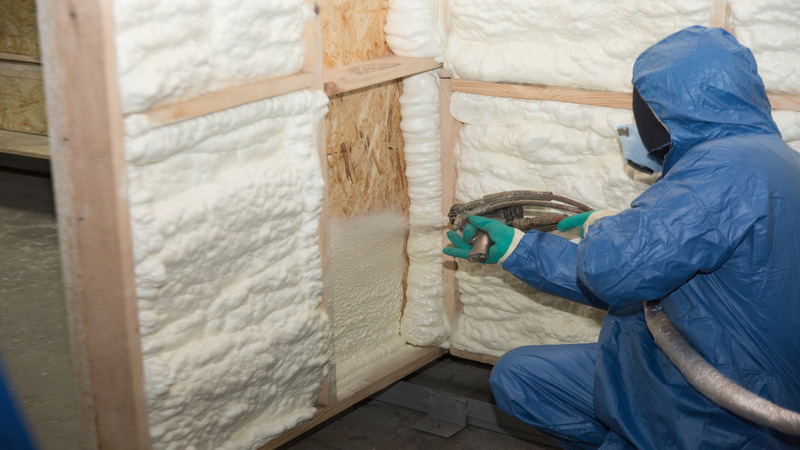
Properly designed ventilation can reduce airborne levels of aerosols, mists, and vapors generated during spray application. During and after spray application, vapors and mists may linger until the area is ventilated and fully cleaned. Homeowners should plan to vacate the space during application and allow adequate cure time before re-entry.
Installing a balanced ventilation system, such as a heat recovery ventilator or central fan-integrated ventilation with a fresh air intake and integrated exhaust, is the standard solution for tightly sealed homes in cold climates like Madison.
How to Avoid These Problems: Practical Checklist
• Verify the contractor checks substrate temperature before spraying in cold weather.
• Confirm which foam type is specified and whether a vapor retarder is required for your climate zone.
• Request a post-installation thermal scan to identify coverage gaps.
• Ask about the mechanical ventilation plan before work begins.
• Only hire licensed contractors who have experience with the material requested and have been trained by the spray foam insulation manufacturer.
Frequently Asked Questions
Can spray foam insulation be repaired if it shrinks or pulls away from framing? Yes. Small gaps can be filled with compatible foam or caulk. Larger adhesion failures typically require removal and re-application of the affected section by a qualified installer.
How long does spray foam insulation last in a Madison home? Spray foam insulation is a long-term solution with an expected lifespan from 10 years to 80 years, depending on product quality and installation conditions.
Is DIY spray foam a good option for Wisconsin homeowners? Some homeowners try DIY kits to save money, but this often leads to uneven application and ineffective insulation, doubling the cost in the long run. Professional installation is strongly recommended for whole-house or attic applications.
Does spray foam require a vapor retarder in Madison? In most applications using open-cell foam, yes. Madison’s Climate Zone 6 designation triggers the vapor retarder requirement under the International Residential Code.
For Madison homeowners ready to address spray foam concerns or start a new insulation project, FoamTech Insulation of Wisconsin LLC provides residential and commercial spray foam services across South-Central Wisconsin. All employees go through industry-leading training programs and are educated in product knowledge, advanced application techniques, and building science and safety standards. Getting the installation right the first time is always less expensive than correcting a failed job later.
Adelaida Abrams
Adelaida Abrams is a seasoned writer with a passion for sharing knowledge in the realm of home improvement. With years of experience crafting informative articles and engaging blogs she has established herself as a trusted voice in the industry. Adelaida's expertise lies in distilling complex concepts into accessible content, making her work invaluable to readers seeking practical advice and inspiration for their home projects. Her articles cover a wide range of topics within the home improvement sphere, including DIY tips, renovation guides, interior design trends, and sustainable living practices. Adelaida's writing is characterized by its clarity, thorough research, and practical insights, making it a go-to resource for homeowners, contractors, and enthusiasts alike. Beyond her writing prowess, Adelaida maintains a deep commitment to staying updated on the latest developments and innovations in home improvement, ensuring that her content remains relevant and informative. Whether you're looking to spruce up your space or embark on a major renovation project, Adelaida Abrams is your trusted guide in the journey toward creating the home of your dreams.